Total restoration

It all started by looking at several project TR7's for restoration.

The previous owners had already started the dismantling process in most cases, which from previous experience always makes work more
difficult. The cars were overpriced and I was losing interest, when I received a call from a friend.

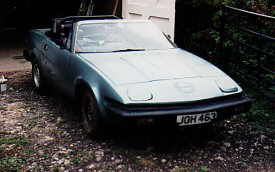
Before the restoration

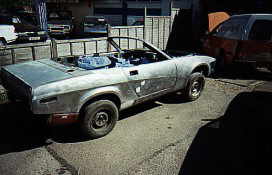
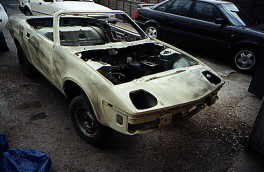
 There was a sorry looking TR7 Convertible with two wheels, a cracked windscreen and a body full of dents lying dormant in the compound next to his works.

It transpired that the car had fallen foul to vandals whilst the owner was storing it there. A closer inspection revealed that other than the the two missing wheels, the car was complete, and even had a current MOT! A deal was struck with the owner and the car was duly trailerd home. A pair of wheels were acquired from the local breakers yard, making the TR7 mobile once more.

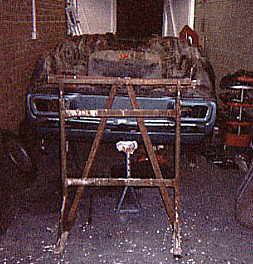
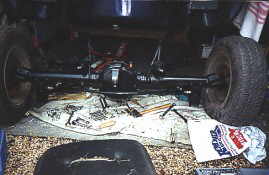
The following months were spent carefully stripping and labeling components from the car. The engine, subframe, front struts and rear axle with suspension were removed and stored for refurbishment. Eventually the TR7 became just a bare shell. A body roller was constructed out of building trestles, angle and scaffold poles, which enabled the shell to be revolved through 360 degrees. It was now time to revive the bodywork of the vehicle.

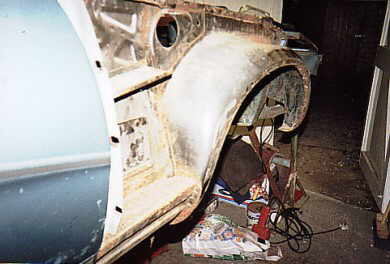
I removed the front offside wing first, which revealed corrosion just taking hold on the lip of the inner wheel arch. The actual inner wing and suspension turret was very solid. A repair panel for the edge of the inner arch was bought from the chaps at Robsport, which proved to
be an excellent fit, and was duly welded on.


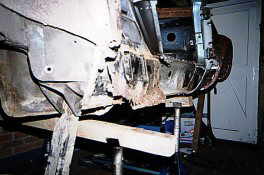
I then proceeded to the sill. Both ends had started to go, so the shell was braced properly with some stout angle iron, before the laborious task of drilling out the numerous spot welds began. Severe corrosion was apparent in the rear strengthening plate of the inner sill, which had started to spread into the inner rear arch. I decided to cut away the rear wing for better access to this area. New sill panels, front and rear wings and hours of juggling with clamps, self tappers and a welder, resulted in the drivers side being completed other than the door. Both of the doors were pretty ropey.

I decided to repair the drivers side door frame, but opted for a good second hand one for the passenger side. Both frames were then treated to new skins. The floorpans were actually very solid, only needing minor plating to the jacking points. The final job on the shell was
to fit rear quarter sills.

The shell now being complete was flipped upside down once again and given a good going over with the Schultz gun. This was in turn primed and painted over in body colour. Whilst the car was upside down I refitted the refurbished fuel tank and new brake lines along the transmission tunnel. It was finally time to dispatch the shell off to the body shop for painting. I decided not to carry this out myself as felt two pack paint would give a stronger finish than traditional cellulose, and for obvious reasons cannot be sprayed without fresh air breathing apparatus.

With the shell being away, work started on the engine. A strip down showed that it was in good condition, but as it was apart I fitted new piston rings, bearing shells and a timing chain and tensioner. All the suspension components were wire brushed and given coats of black Smoothrite along with subframe and axle. The Brake and clutch components were either renewed or re-bushed, and all the electrical components and loom were cleaned and checked in preparation for
refitting.

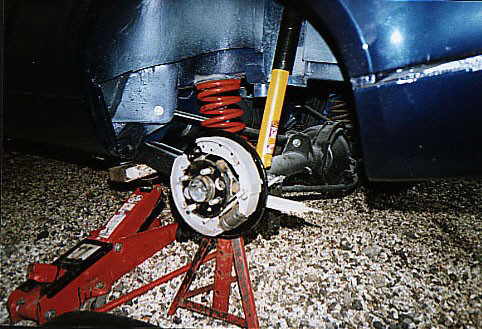
The bodyshell returned looking magnificent in BMW Mauritius Blue. At long last the time had arrived for re-assembly! I started with the front subframe and struts and rear axle. Spax adjustable dampers
and springs were fitted along with uprated suspension bushes and an anti dive kit. The brakes were uprated with new vented discs and rebuilt calipers from a scrapped Capri. A local machine shop turned the spacers to give the correct clearance for the caliper between hub and disc.

The trim and electrical components were refitted after the completion of the mechanics. A new carpet set was used, but fortunately the majority of the interior trim cleaned up OK. A new blue mohair hood and a set of MGF 15" alloy wheels completed the car.

The car was finished in April '98, four years after starting the project. A month of fettling  and fine tuning prepared the car for its first major outing - The Le Mans 24 hour race in June '98.

Unfortunately the car is now for sale, as my wife and I are expecting our first baby in May 1999.

Richard Moon (UK)